

by Gavin Heaney
2026
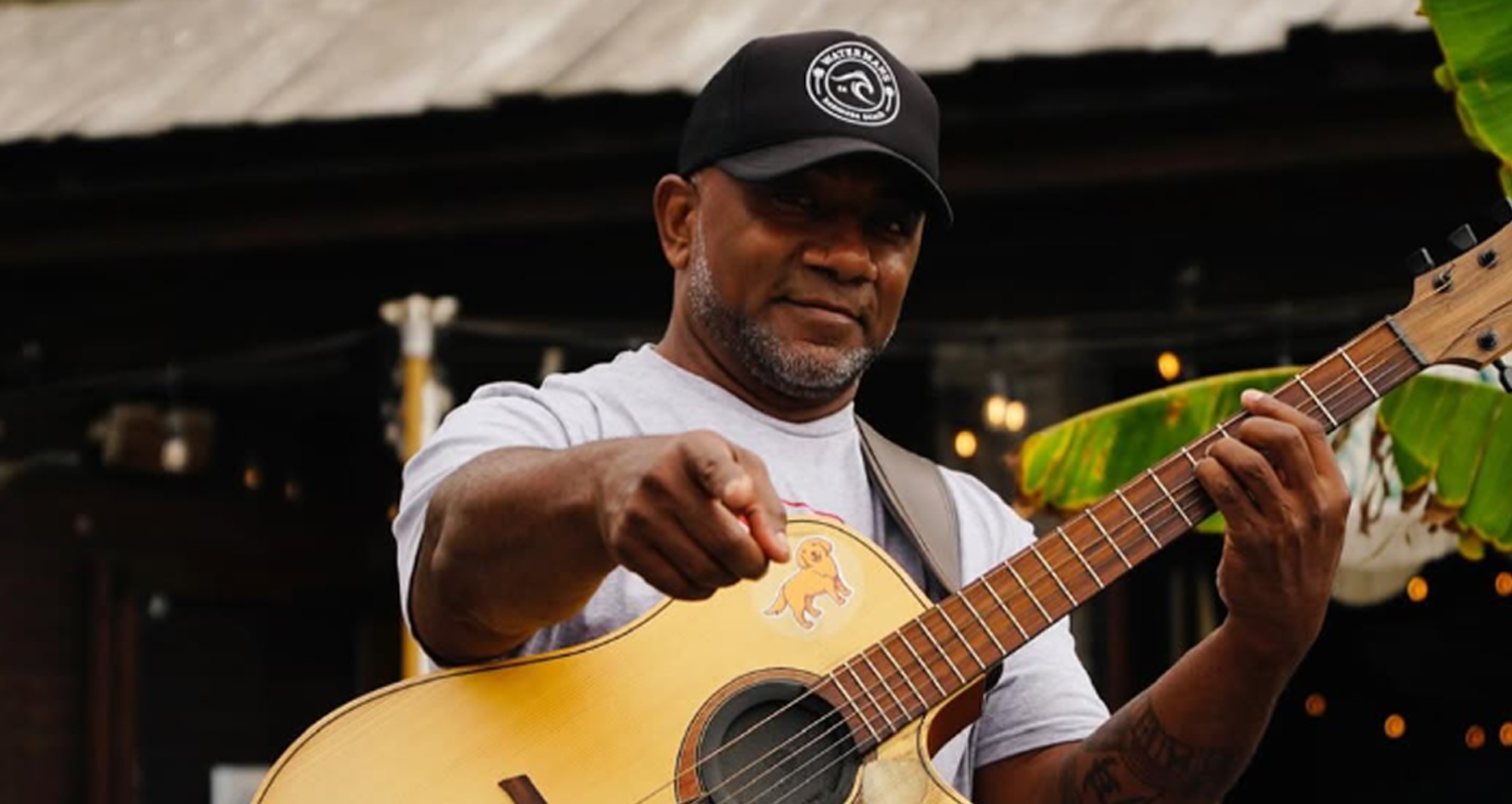
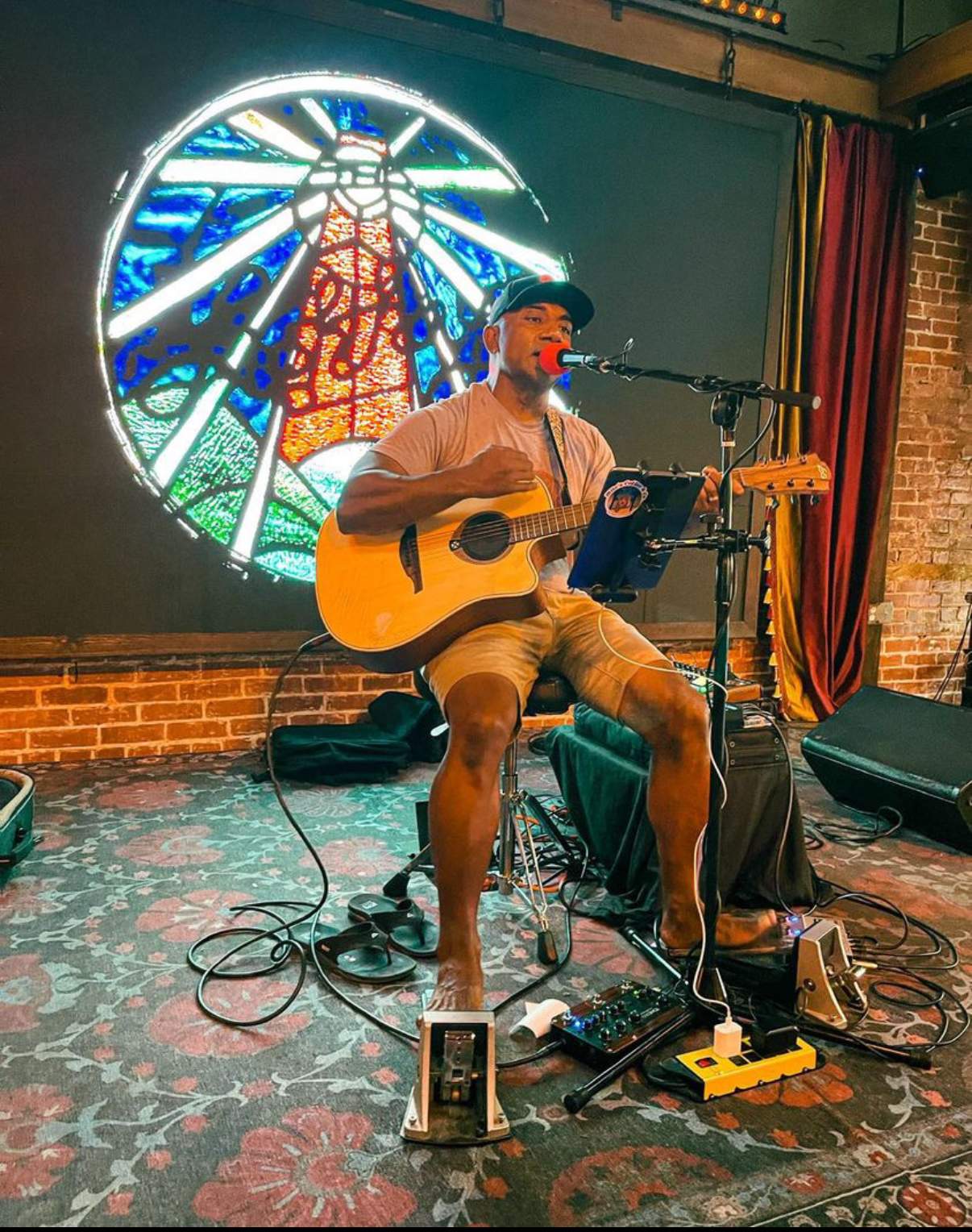
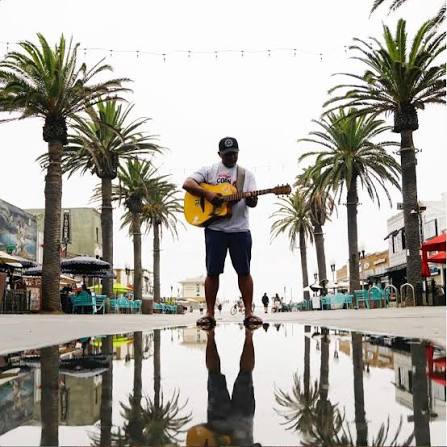
Wais Katubadrau, known more locally as "Wais," is a one-man music-making machine. Like a reggae jukebox, he performs a seamless and endless playlist of sing-alongs and memorable mashups in his own signature island style, while peppering in his own original heartfelt songs. Strumming guitar while tapping live drum beats with his feet on drum pedals, he sings from deep down, gently doubling his vocals sparingly and tastefully with his harmonizer. His sound soothes like a sea breeze, warm and misty, carrying good vibes with a fullness that rivals a four-piece band.
"It took me a good six years to really get my sound right," he said. "It's a lot of work to have that mindset thinking about three things at the same time. It can be challenging."
Wais was born and raised in Fiji, where he played more rugby than music.
"My mom was a songwriter in church. I sang a little bit in the choir. Me and my cousins would hang out in the back messing around — that's about it. Nothing like what I'm doing now."
He's quick to point out he's no natural-born vocalist, especially next to family back home. "A lot of my cousins, they have angelic voices. I don't hold a candle next to them." It's a comparison he makes almost proudly, like a man who knows exactly what he is and isn't, and has built a career on the difference. "I'm more of a storytelling voice," he said. "I'm not a singer, singer. I'm a singer-songwriter."
"It took me a good six years to really get my sound right," he said. "It's a lot of work to have that mindset thinking about three things at the same time. It can be challenging."
Wais actually began performing music decades later, when he moved to Vermont around 2004. "I started music at the age of 32 and just learned guitar through YouTube,” he said. “I only knew three chords and that's it. I stuck with that. Three chords took me a long way, brother."
Back in Fiji, hardly anyone in his family had any idea this was where he'd end up. "A lot of my family back home have not seen me perform," he said. "It blows their minds when they see me on social media. They'd be like, damn, didn't realize you were doing that!”
The three-chord jams that comprise songs like Bob Marley's "Three Little Birds" and Jack Johnson's strummer "Bubble Toes" are the essence of Wais's go-to guitar patterns. "Guitar-wise, I was inspired by Jack Johnson's rhythm — how he plays, the percussive way," Wais said. "Lyrically it would mainly be Peter Tosh and Bob Marley. We grew up with a lot of country too, like Kenny Rogers, Merle Haggard, Brooks & Dunn, Toby Keith." Country music is famously described by songwriter Harlan Howard as "three chords and the truth" — the idea that a good song doesn't need embellishment, just plain, honest performance. Wais seems to have absorbed that lesson early and never let it go, sticking to his guns and playing every cover and original earnestly, always in service of the song rather than the show.
"Guitar-wise, I was inspired by Jack Johnson's rhythm — how he plays, the percussive way,"
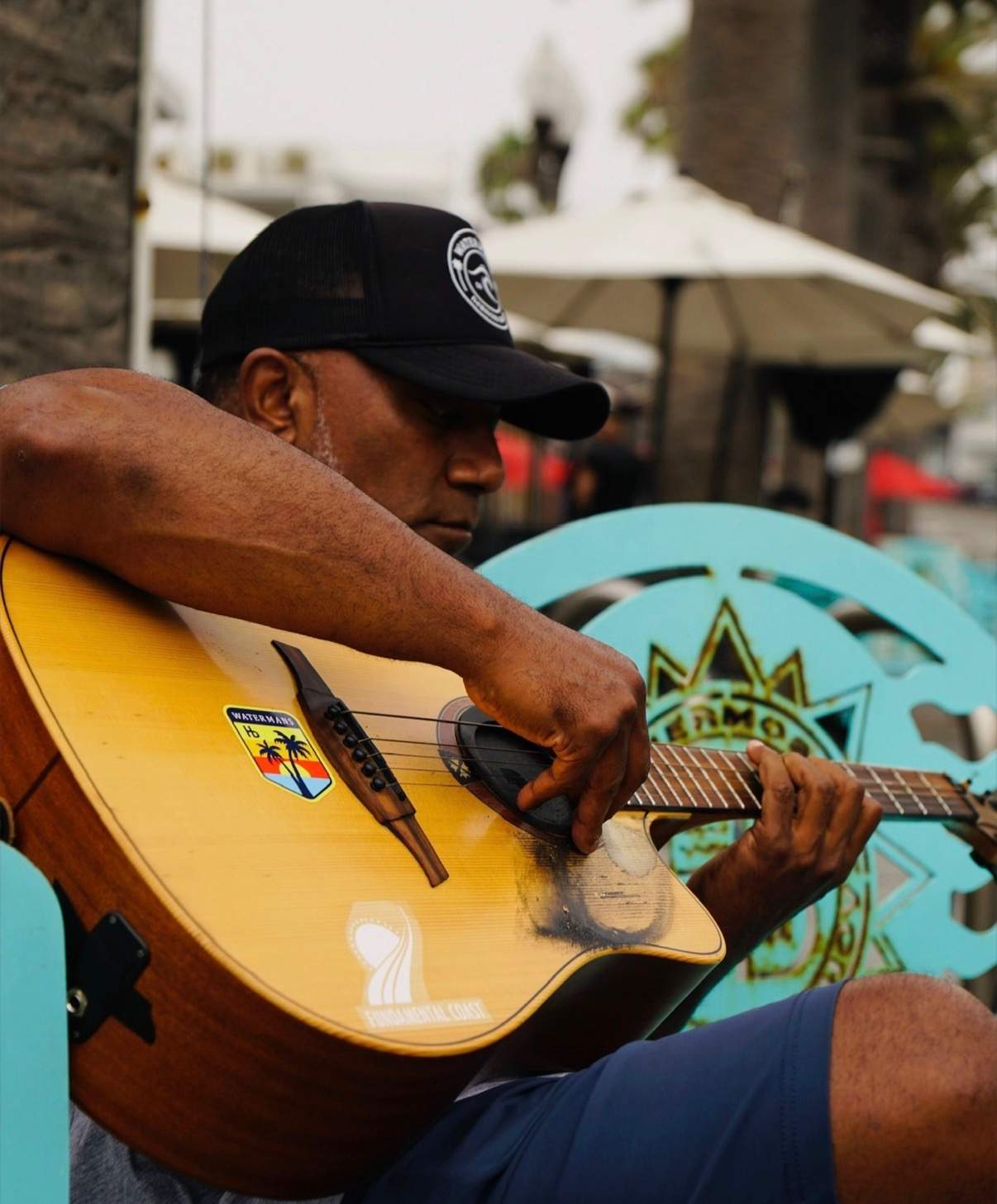
That tendency is clear in the way he handles other people's material. "When you sing a song just like the record, people criticize the crap out of you," he said. "But when you sing it the way you want to interpret it, people really appreciate that." He isn't chasing note-for-note accuracy; he's after something closer to translation. Ask him about a particular song and there's a decent chance he doesn't even know who wrote it originally, because he's absorbed so much music by ear over the years that attribution sometimes falls away entirely, leaving just the feeling of the song. What's left after he's run a tune through his own phrasing and timing is something that belongs to him as much as to the original artist, and audiences respond to that ownership.
Wais is a folk musician, not necessarily in genre, but in function. He takes the vast, shared catalogue of popular music, preserves and curates it, hand-packages it, and delivers it with a working man's mentality. He seldom takes breaks while performing, and seems on autopilot as he easily plays through 25 songs an hour. He currently lives in Las Vegas, driving back and forth to gigs in the South Bay on weekends, stopping to play shows along the route. "I don't mind driving," he said. "I love the road. To me, it's therapy.”
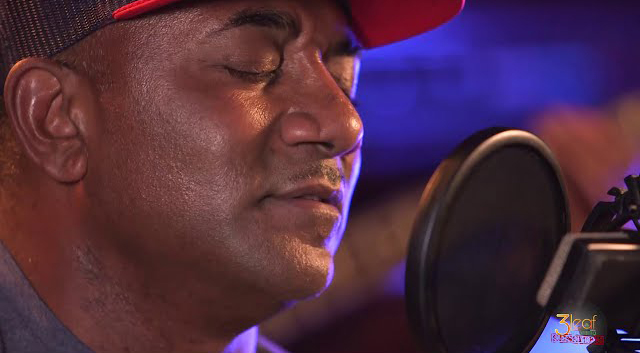
Wais also sings his own songs, inspired by his journeys, the people he meets along the way, and always his faith and island home of Fiji. Since 2020, he has released six singles on streaming platforms. "Welcome to Hermosa" is the perfect soundtrack to a South Bay sunset, and "Boulder City," sung with a wistful weariness, chronicles his road trips from Nevada. The track has a more country sway and was produced by fellow musician Chris Shaw. It's refreshing to hear Wais's take on the American dream — seeing the country through his eyes reveals the beauty and freedom that those born here can take for granted. All of his songs carry his island roots and acoustic grounding, and his track "Here With You" pushes into modern rock guitars, suggesting he has much more musical landscape to offer beyond reggae. He's also a producer himself and a mentor for the next generation of South Bay reggae bands, like Tomorrow's Bad Seeds and Fortunate Youth, whom he gives friendly shout-outs to in his song "California Time."
Wais may be the hardest working musician in town. He puts his head down and grinds hard, gigging nearly every day. His humble, self-deprecating nature doesn't reveal the depth of his devotion to his craft, but his sound speaks volumes. Rather than forming a band, he continues to be a solo artist, even as bigger festival stages pass him over in favor of full bands, or full productions built around video screens and light shows meant to hold an audience's attention.
"I always get turned down with stuff like that," he shrugged. "It's all about distraction nowadays. I don't mind, I’m used to it."
"I always get turned down with stuff like that," he shrugged. "It's all about distraction nowadays. I don't mind, I’m used to it."
It's the strange tax paid by a musician who does the work of four people and gets read, at a glance, as one guy with a guitar. Given the choice, he gravitates toward rooms with nothing between him and the crowd. "That's why I like intimate shows," he said. "One light on you as an artist, everything blacked out, you can see the silhouettes of people listening. I love shows like that." Wais, like seated solo serenaders Richie Havens and Ben Harper, believes the song, not the spectacle, was always the point of the show.
His instinct toward intimacy is exactly what makes his sets a shared experience. He sees his audience as a congregation he's serving. "I've been blessed with this talent, to play music and put smiles on people's faces," he said. "It rejuvenates them."
It's a personal reward for a job that requires hauling gear alone, driving hundreds of miles every weekend, and running four limbs' worth of independent rhythm at once for hours on end. For Wais it's a labor of love. He shrugs off the challenge. When asked what he'd love to do someday, he didn't hesitate. "I just imagine doing a big beach show on the sand someday with people just chilling.”
Come chill with Wais and experience his “One-Man Music” at the El Segundo Art Walk on Saturday August 22, 2026.


