

by Mark McDermott
2026
Photos by Chelsea Sektnan Art by Neal Von Flue
There is a guy in El Segundo who builds motorcycles in his warehouse lair in Smoky Hollow, reinventing Harleys and other vintage bikes. He's a fourth generation local and looks like it.
There is also a guy in El Segundo who is a fine arts painter and sculptor, an artist who has been the subject of academic papers and for a long time served as the influential chair of the city's Arts and Culture commission. For a man possessing the painstaking manual skills of a Renaissance artist, this guy also has a twist – he was playing with machine learning as part of his art years before AI was on the general populace's radar.
For a man possessing the painstaking manual skills of a Renaissance artist, this guy also has a twist...
Then there is this guy who plays banjo and sings, and with his buddy Tony can be found at many of the cooler events in El Segundo performing old and new songs and generally rousing out whatever sleepiness was left in the room.
Then there also is this guy who writes scholarly calls to creative action – perhaps most famously The Dog Leg Manifesto – and compiles entire books of free-wheeling thoughts, art, and provocations.
Finally, there is this guy who is the kind of teacher a lot of kids thought only existed in movies until they stepped into his classroom, where many of those kids arrived only because they were required to and left, often reluctantly, nine months later with a profound gift they carry into the rest of their lives – the notion that yes, of course they are creators.
"I'm an onion," he said. "Just like Shrek. That's probably the most accurate thing I've ever heard."
But here's the thing. All these guys are one guy, Neal Von Flue. His friend and collaborator John McCullough calls the slightly disconcerting phenomenon of Von Flue "the layers of Neal." He first came to better know Neal as a commissioner, then as a painter, then as a banjo player, then at some point realized an old mural done a quarter century ago – it was all Neal, unheralded, his fingerprints all over town.
"I walk into his motorcycle garage, and we go upstairs, and he's got everything displayed – but everything's always in progress," McCullough said. "His motorcycles are fantastic, epic pieces of 1960s, 1970s Harleys, but they're always being worked on. And it's the same thing with the art. You see these amazing pieces and it's, 'Oh, I'm still kind of working on that one. I'm still putting the finishing touches on that one.' You would never know it. He'd never brag about it or talk about it. You just walk in there and you find these layers of Neal, these artistic layers of Neal."
Von Flue does not dispute the diagnosis.
"I'm an onion," he said. "Just like Shrek. That's probably the most accurate thing I've ever heard."
And so, yes, of course: McCullough, the event producer of the El Segundo Art Walk, last year formally brought Von Flue aboard the merry pirate ship that is ESAW as its artistic director. It was a match that seemed somehow destined, Yet another layer of Neal.
"His experience and his knowledge is just fantastic,” McCullough said. “As an art director, he just brings a lot of credibility and experience with it. I've worked with Neal on the Arts and Culture Committee for five years, and it's great to be working with him on this side of it, on the Art Walk side. His creativity and attention to detail, but also his understanding of formality and how things work within the city, is pretty unrivaled."
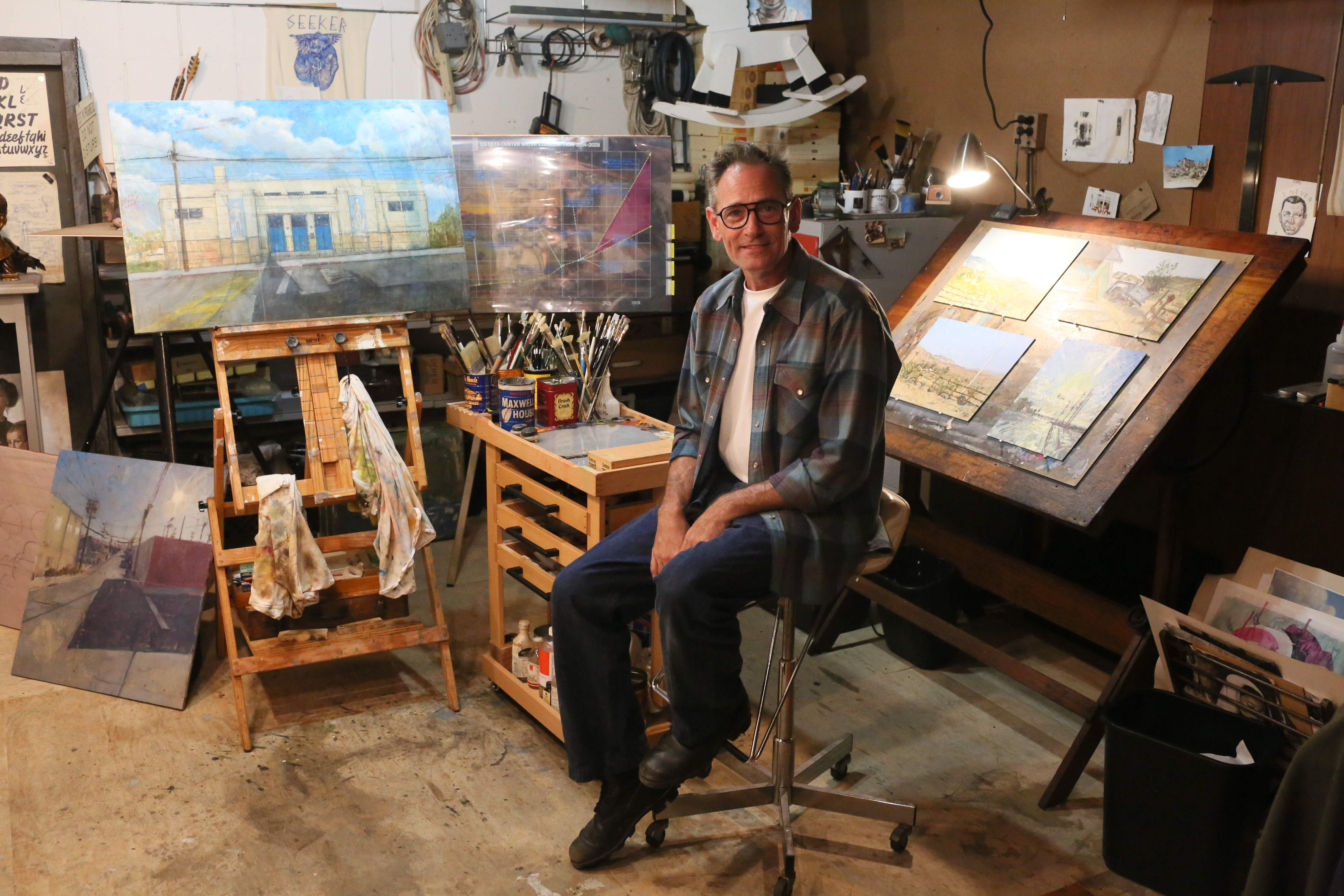
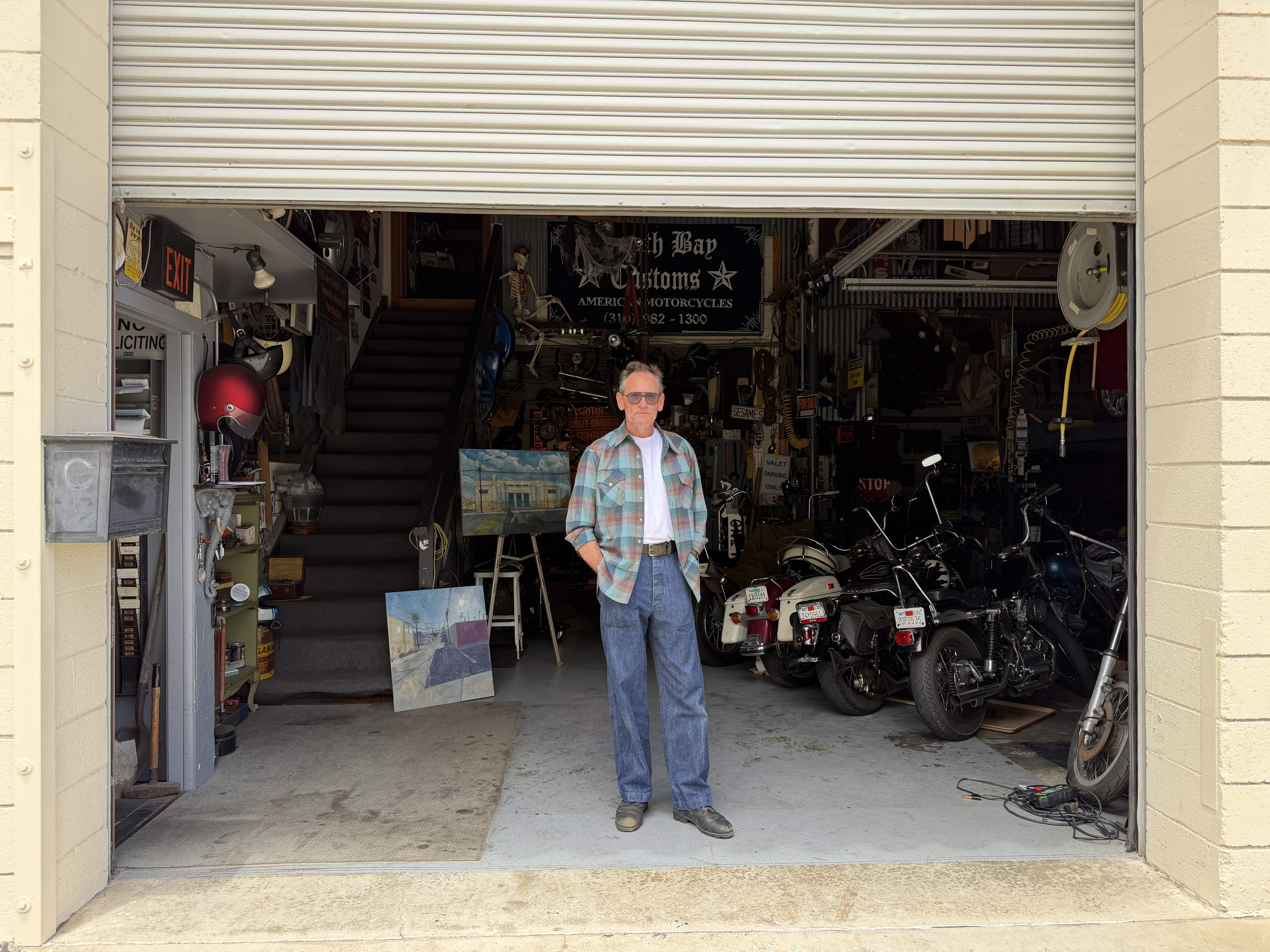
Von Flue’s studio is in a two-story warehouse on Arena Street in Smoky Hollow, a building that has been in his family, as Universal Engravers, for decades. The sign is still hanging over the shop floor, among the gas station discs and Harley placards, beneath a full military parachute billowing across the ceiling like artistic weather. Two small Swiss flags, a nod to Von Flue heritage, hang off the stair rail. An El Segundo city flag and an American flag hang high on the back wall.
"We'd go on rides together," Von Flue said in 2021, the year after his father died. "It became a meditation."
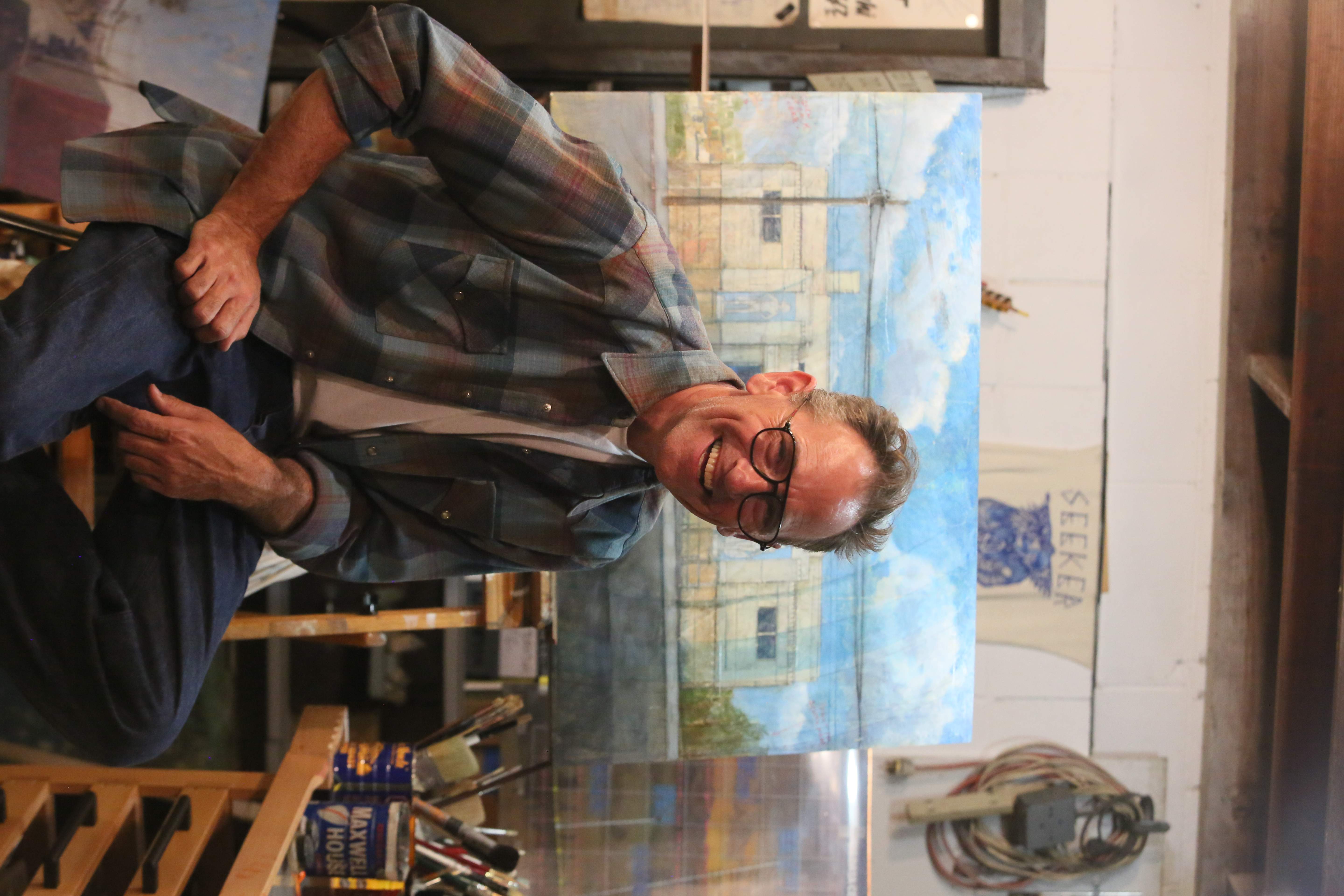
The engraving shop was his father's. David Von Flue taught his son to draw, to ride, and to build a motorcycle out of parts, and the two of them eventually built one together. "We'd go on rides together," Von Flue said in 2021, the year after his father died. "It became a meditation."
Neal is a fourth generation El Segundoan.
"We moved here to work at a refinery, and that refinery is the backdrop of our entire view of our city," he said. "It's just kind of there all the time."
Motorcycles are backed in along one wall, a plastic skeleton hanging near a sign for South Bay Customs, which is where Von Flue and his buddy Tony used to play music at the earliest Art Walks, back when Michael at SB Customs was part of the first group that put ESAW together. Stairs run up the side wall to the studio. Up there the brushes stand by the dozen in Maxwell House cans, and there is a drafting table, a field easel with rags over it, and a white rocking horse hanging from the rafters.
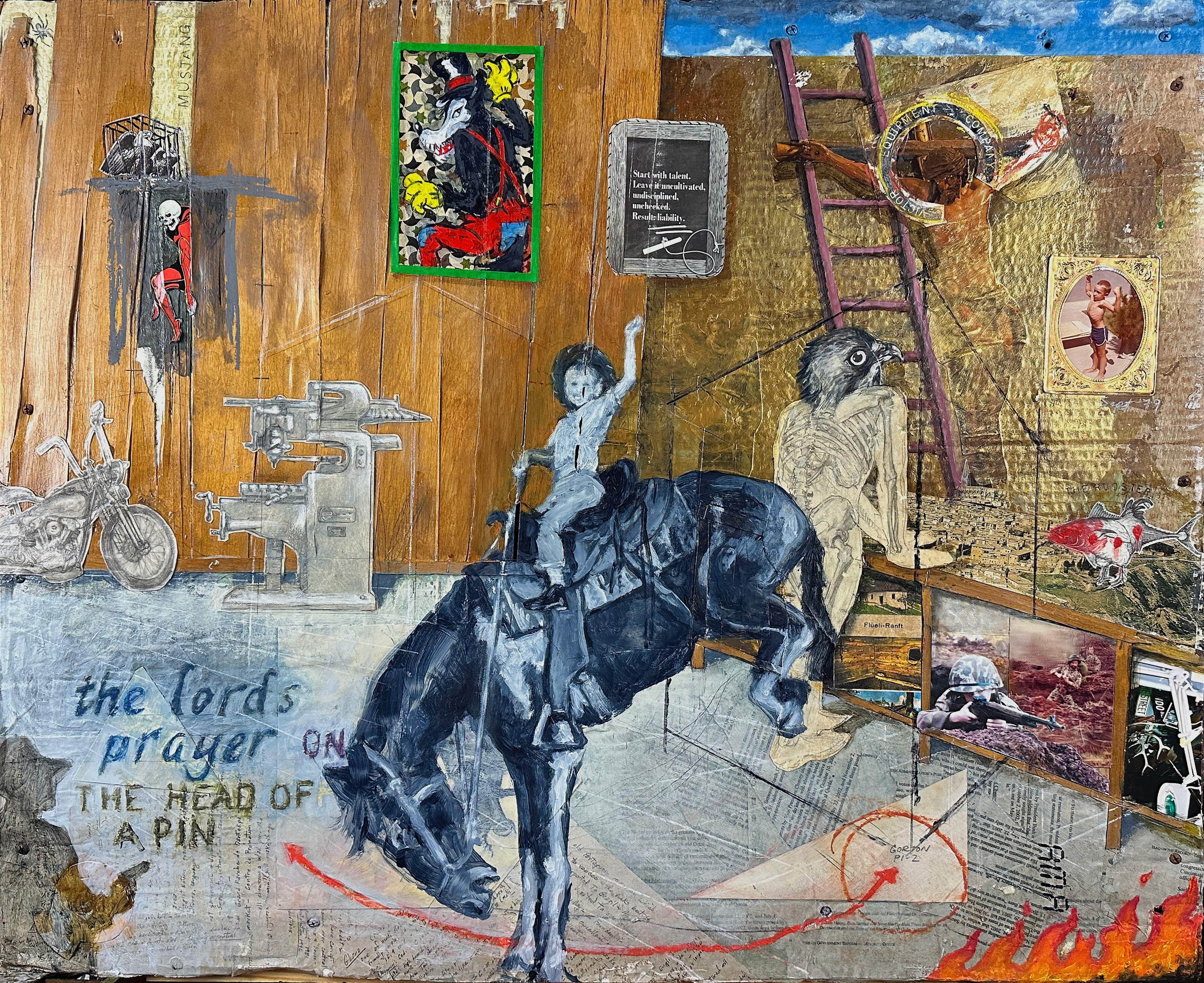
This year's Art Walk is Saturday, Aug. 22, from 3 to 9 p.m., free and self-guided. Businesses across downtown and Smoky Hollow open their doors and hand their walls to artists from across Los Angeles. There is also live music, food trucks, and demonstrations at Standard Ceramics, the new pottery studio in town, which was Von Flue's suggestion. They intend to bring wheels down and throw pots in front of people.
The idea is in keeping with the exuberant architecture of ESAW – a live pottery show here, a glass blower there, and art absolutely everywhere. Art happens in art studios, but art also happens in breweries, surf shops, office buildings, restaurants, school walls and city streets. It is this vibrancy that keeps attracting more and more artists to town.
"We get over 300 applications a year and we've got to pare that down to 80 or so artists," Von Flue said. "You can't have 50 potters, you can't have 25 figurative painters, you can't have 40 sculptors."
"The developers and the people who have decided to bring their businesses here are responsible for making that community benefit, and that's great,"
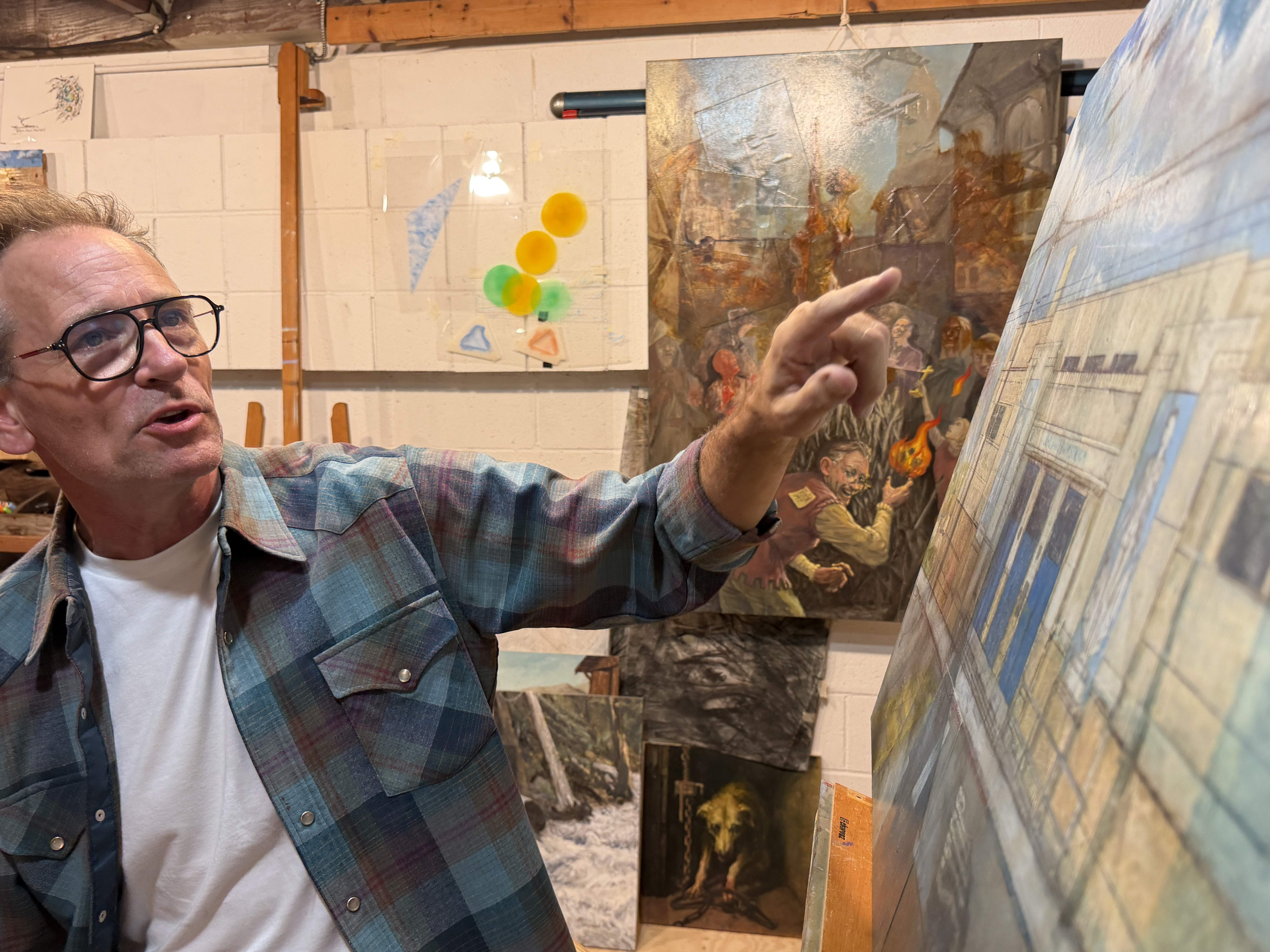
Like ESAW itself, an ongoing sense of discovery that fires Von Flue's involvement. Like El Segundo, you never know what is going on behind that warehouse door until it opens up and invites you in. "The artists that I have found or noticed or seen that I had no idea were in the area," Von Flue said. "That this person's just down the street is mind-blowing to me."
On the easel in his studio is a large painting of the Plunge, formally the Urho Saari Swim Stadium, the WPA-era building the city recently refurbished. Von Flue points to that refurbishment, along with the Art Walk itself and the library's enrichment programs, as what the city's Cultural Development Fund has made possible, a percent-for-arts program paid into by developers.
"The developers and the people who have decided to bring their businesses here are responsible for making that community benefit, and that's great," he said. "They should be thanked, and they should be celebrated. It's one of those examples where I think that art and business, for lack of a better term, can really go the same direction. They're not at odds, always."
Which is a notably generous position from a man who wrote a manifesto (“The Dog Leg Manifesto”) about severing the two. But his argument was less about the ills of the commercial impulse and more about the notion that creating is best done for creation's sake. And Von Flue will use whatever tool is at hand – a banjo or a paint brush, a torque wrench or a neural network – to further the means of creation.
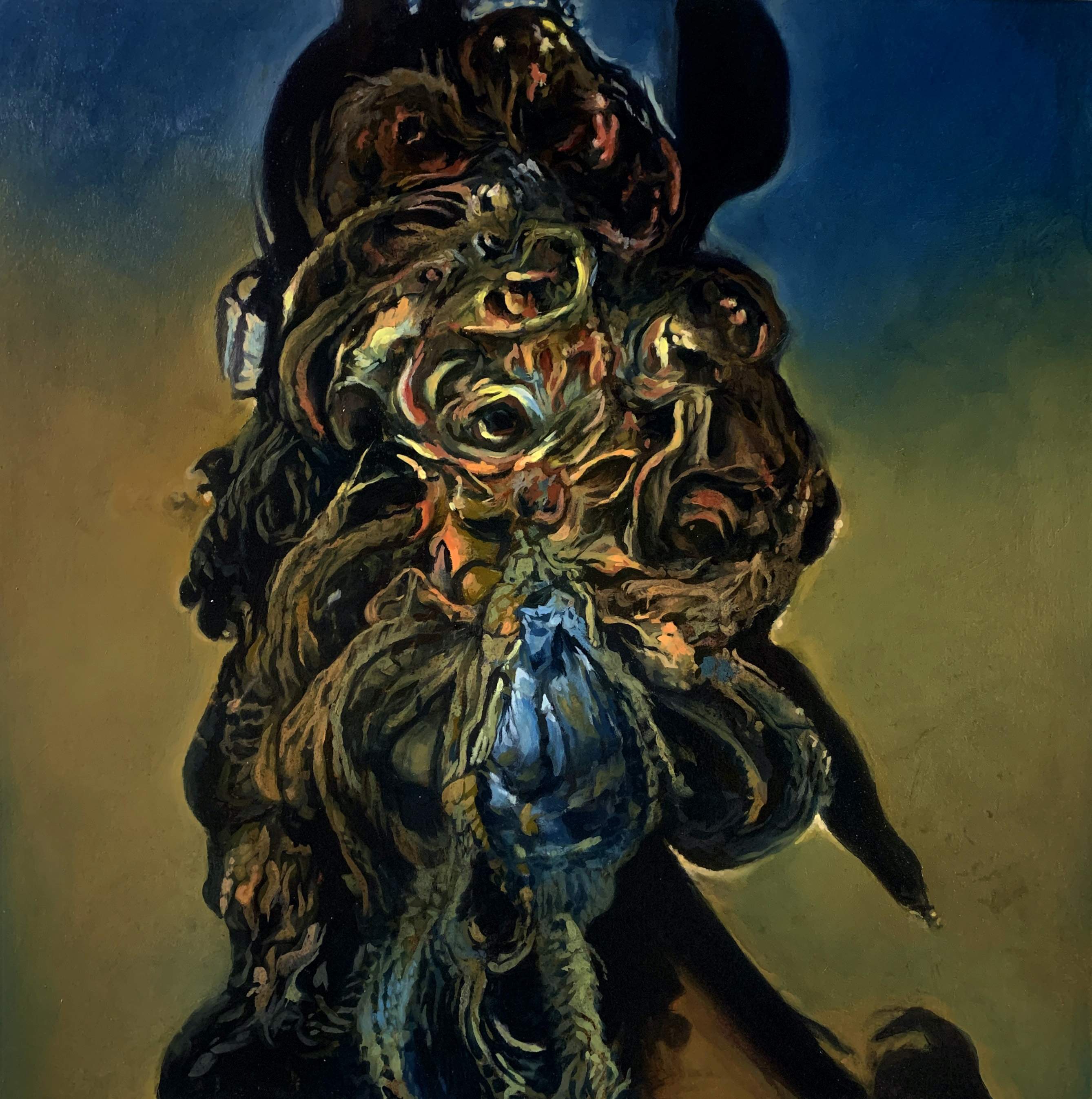
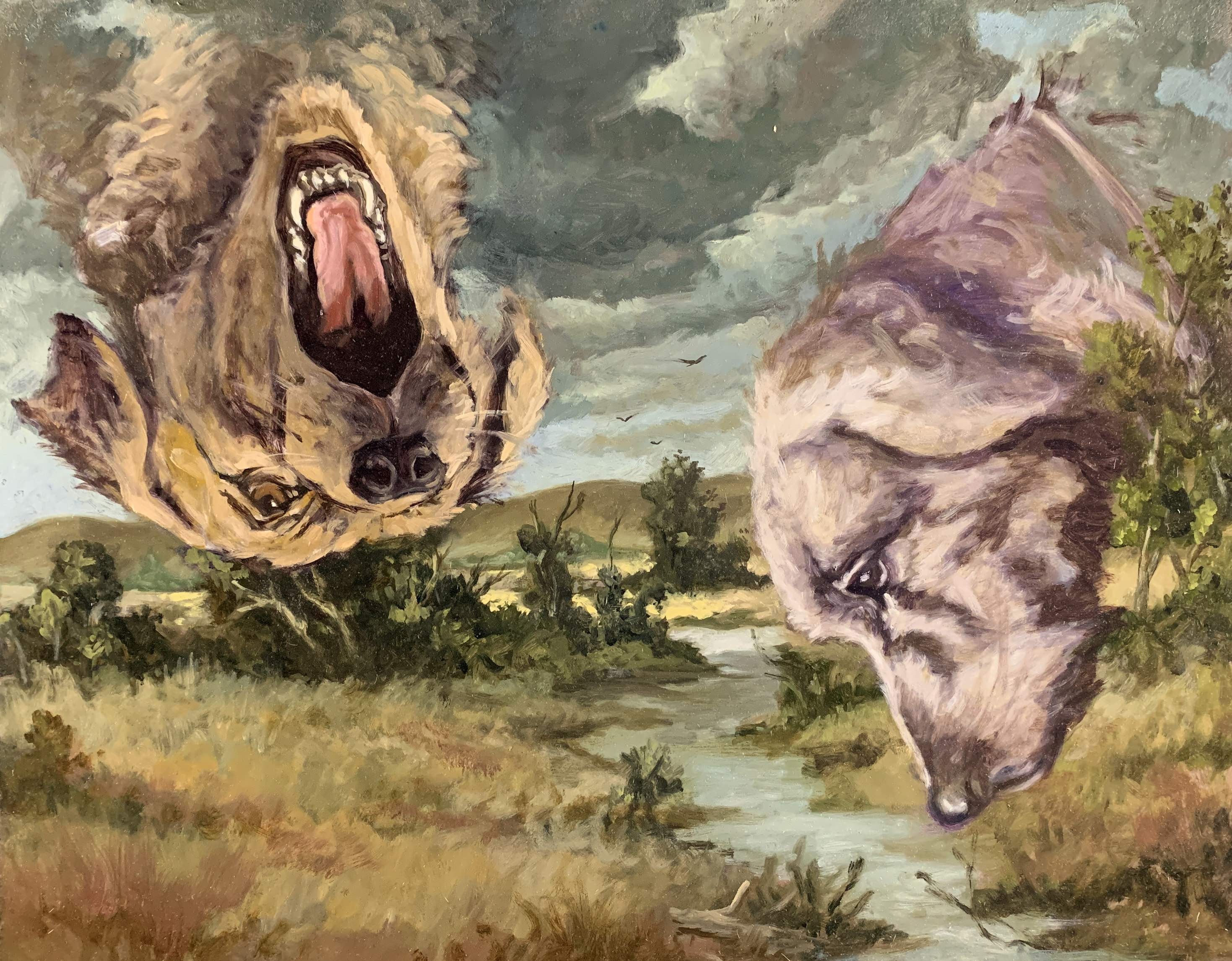
Around 2017, before most people had heard the phrase, Von Flue began working with a generative adversarial network, making images with it, curating them, then painting them by hand in oil. The point, he said, was taking them "from digital images and kind of retrogressively putting them back into the physical world." The Brill Family Foundation in Santa Barbara showed the paintings late last year in an exhibition on AI and human creativity, then gave him a grant to join a working group of artists thinking the problem through.
What he came away with was that AI can do all of it except process. And human beings are exquisitely gifted at artistic process.
"AI is bad for artists, is what everybody says, and I think that's true," he said. "But the steam drill was bad for John Henry. And who do we talk about now? We talk about John Henry. We don't talk about the steam drill anymore. But who do we want to be?"
So he went looking for pure process and found it in the most boring place he could think of.
"I started painting landscapes because that's the single most boring thing I've ever thought of in my life," he said. "And I realized, my God, I love painting landscapes, because it is 100 percent process, and the result almost doesn't matter."
"I love painting landscapes, because it is 100 percent process, and the result almost doesn't matter."
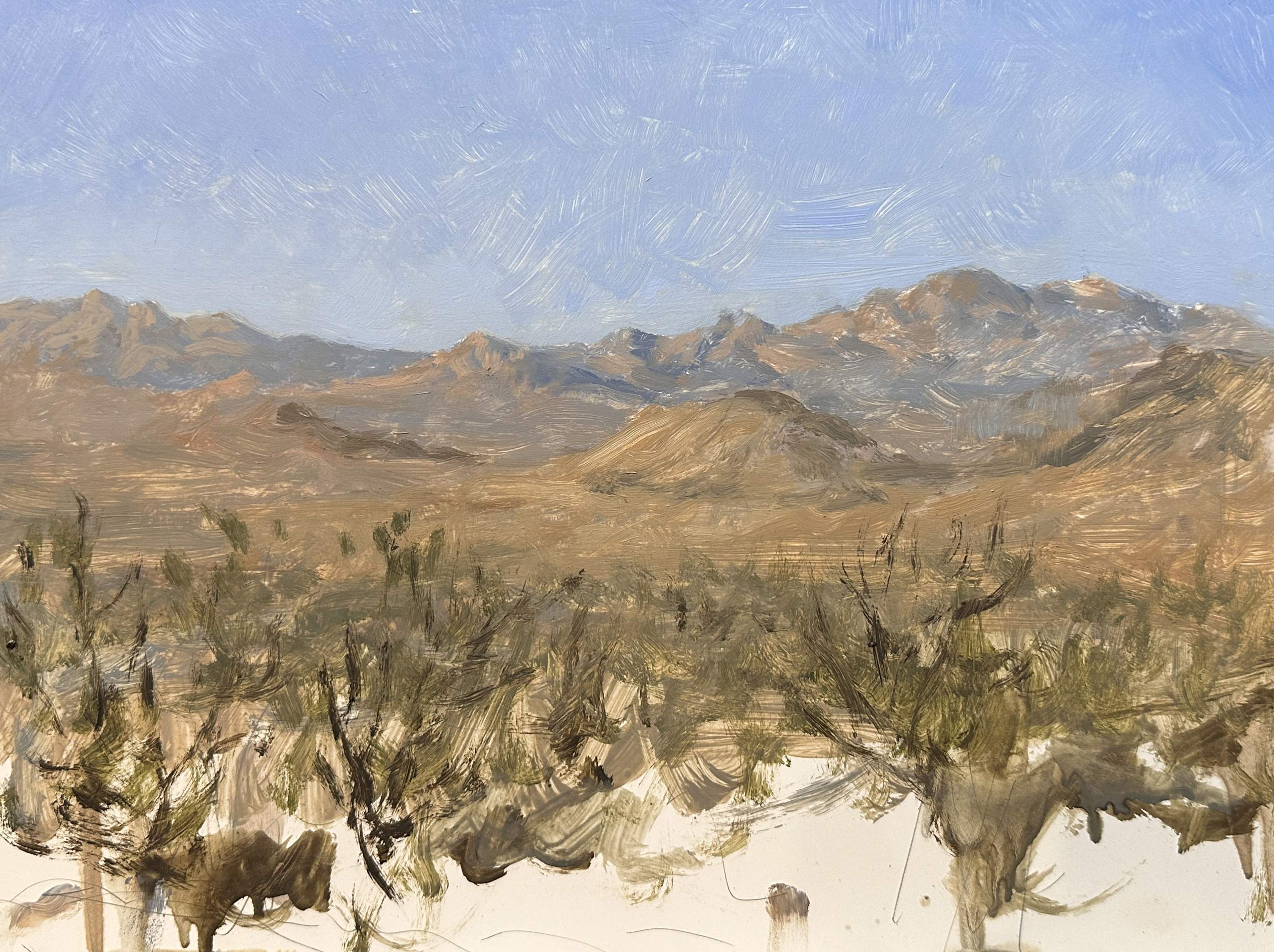
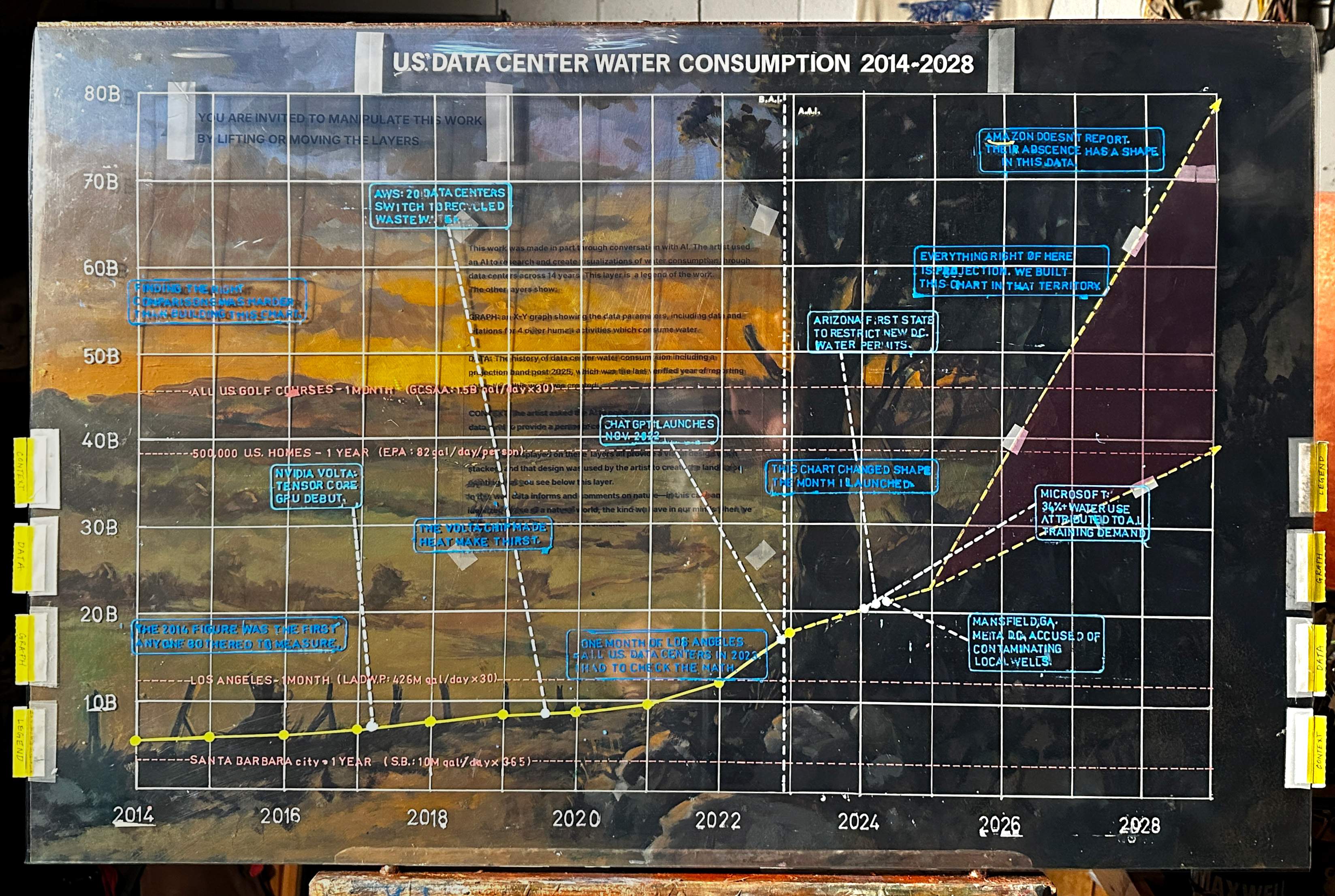
He is John Henry, and boy does he know how to swing that hammer. He spent this summer painting plein air at South Coast Botanic Garden. He also finished the work for the foundation, where the group's shared theme turned out to be data: how it is gathered, and what it costs. He had AI help him turn a data set into a visual design, layered that onto acetate sheets so a viewer can lift the layers by hand, and painted a landscape underneath, using the data itself as the sketch. One of the overlays charts United States data center water consumption from 2014 to 2028.
Here the story folds back on itself. Smoky Hollow is now full of tech companies, and tech companies need data centers. El Segundo has several. One more was proposed recently and withdrawn after enough residents turned up at the planning commission to object.
"It was oil before, and now data centers are a very interesting focal point — their consumption, and the way they're scrutinized in a way that I don't think Standard Oil was ever scrutinized when it showed up here 100 years ago," he said.
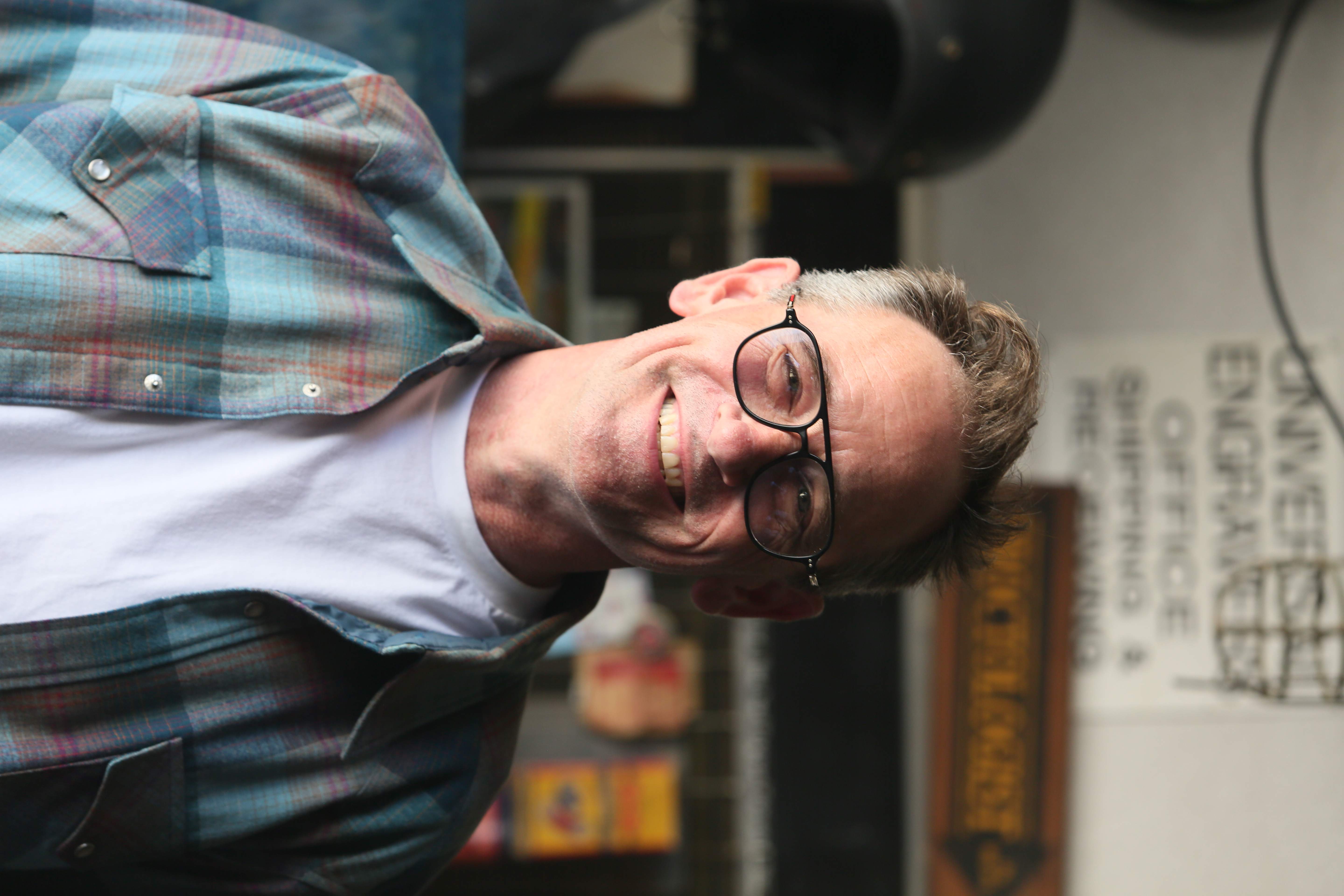
Von Flue begins his tenth year teaching art at Vistamar this fall, a small private school in El Segundo. He describes himself as “the luckiest person in the building.” His teaching philosophy rests on a counterintuitive notion: there is no such thing as talent. At least not in the way we usually think of the artistic impulse. It is once again about process: about the fruits of doing the work itself.
He knows this from his own experience. On paper, he says, he is a high school graduate. He went to El Camino College and took art classes, eight years of them, with nobody telling him to go back and finish a math requirement. He did not graduate. "I gestated," Von Flue said. He made work, a prodigious amount of it.
He and his former partner, Dawn, eventually went into business as Von Flue Studios, an El Segundo shop that would take on more or less anything, from web pages to massive murals. In 2004, they did a project that scattered 20 painted surfboards around Hermosa Beach for the summer. They later did a 40 ft. wide, ten panel mural for Hermosa’s centennial.
"I think the public reacts to art," Von Flue told the Times. "This shows you that art can be anywhere and for anybody."
Eventually he realized he was not especially happy as a working artist but loved teaching. At Vistamar, he found a school that cared less about his degrees and more about what kind of teacher he would be.
What he saw in classrooms confirmed what he suspected about the conventionally accepted notions the role talent plays in the making of art.
"I know plenty of people that would have less ‘talent,’ but work harder and find out stuff that is just as good or better because of their work ethic and their ability to try, their comfort with taking risks, and their introspection," he said. "All of those things feed being a good artist. And those are skills that can absolutely be cultivated."
Learning to draw, he says, is technical, like learning to write or to drive. The rest is harder. And the students who occupy him are not the ones who arrive already good.
"I think the public reacts to art," Von Flue told the Times. "This shows you that art can be anywhere and for anybody."
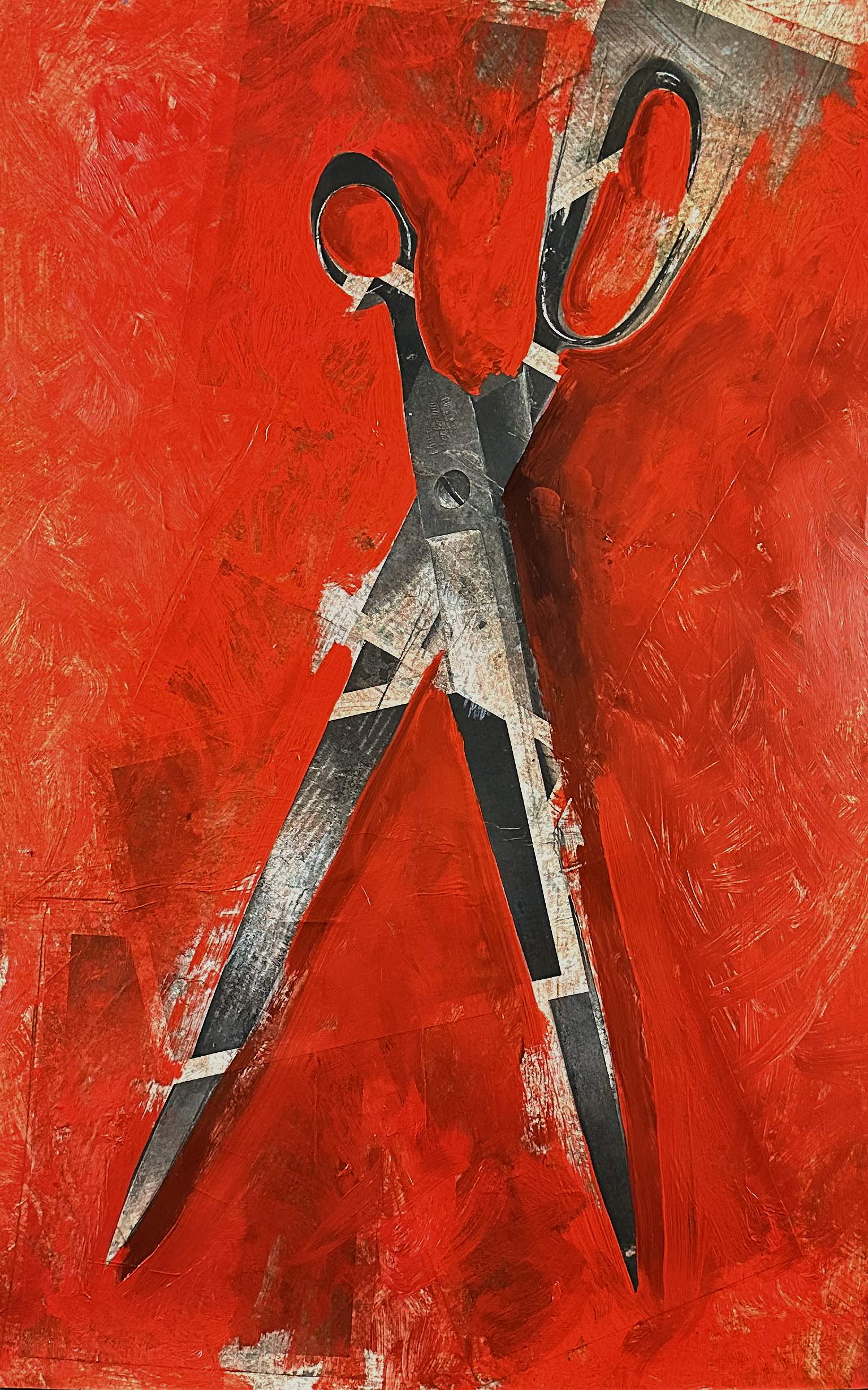
"If I've got two kids coming into the room, and one has been told they're a great artist their whole life, and this is their identity, and they sit next to a kid that doesn't want to draw and has been told they're not talented, how do I get that second student to try?" he said. "They're already coming in two down."
The ones who have already been given confidence in their abilities, he says, will go live artistic lives no matter what. It is the other kids who keep him up at night.
"I really, really love working with kids who are scared to draw," he said. "If you're willing to try, and you give me the first trimester to teach you the technical skills of drawing, I guarantee you will draw better than you ever thought you were capable of drawing."
"My favorite thing is when there's a senior who needs to finish their art requirement, and they just have to take my class because they have to graduate, and they hate it," he said. "And so many of them by the end of the year go, 'I wish I'd done this three years ago. I can't believe I'm graduating and just got a chance to do this.'"
The reverse haunts him. If a student left his room having concluded that art was for other people, he said, "I would feel two inches tall."
Which is essentially the Art Walk's argument, aimed at adults. Most people, Von Flue said, meet art through museums and institutions. The Art Walk puts it "down into areas where we spend all our time," at your favorite restaurant, down the street from where you live. He thinks it should happen more than once a year.
"I don't think we'd be the poorer for it."
On Aug. 22 the roll-up door on Arena Street will be open to the sidewalk, and anybody walking past can see straight in: the bikes, the parachute, the stairs going up to the room with the paintings. Three other El Segundo artists will be showing their art there. And whatever is on the easel that day will be up there too, perhaps unfinished, the way things tend to be. In process.
Another layer of Neal.
The El Segundo Art Walk is Saturday, Aug. 22, from 3 to 9 p.m. Free and self-guided. Maps at participating businesses and at elsegundoartwalk.com. Von Flue Studio is at 138 Arena St., Unit C.


